
Multi-chain Assets
Different networks maintain independent state and fee mechanics. Treat network choice, address verification and transaction confirmation as one continuous workflow.
Explore multi-chain networks →A multi-chain wallet, blockchain network and Web3 knowledge hub from imtoken
Understand multi-chain assets, network selection, transfers, DApp connections, signatures, approvals and wallet security in one clear framework. imtoken also explains public chains, EVM, Layer 2, gas, Ethereum PoS and validators so users can understand what they are confirming before an on-chain action.
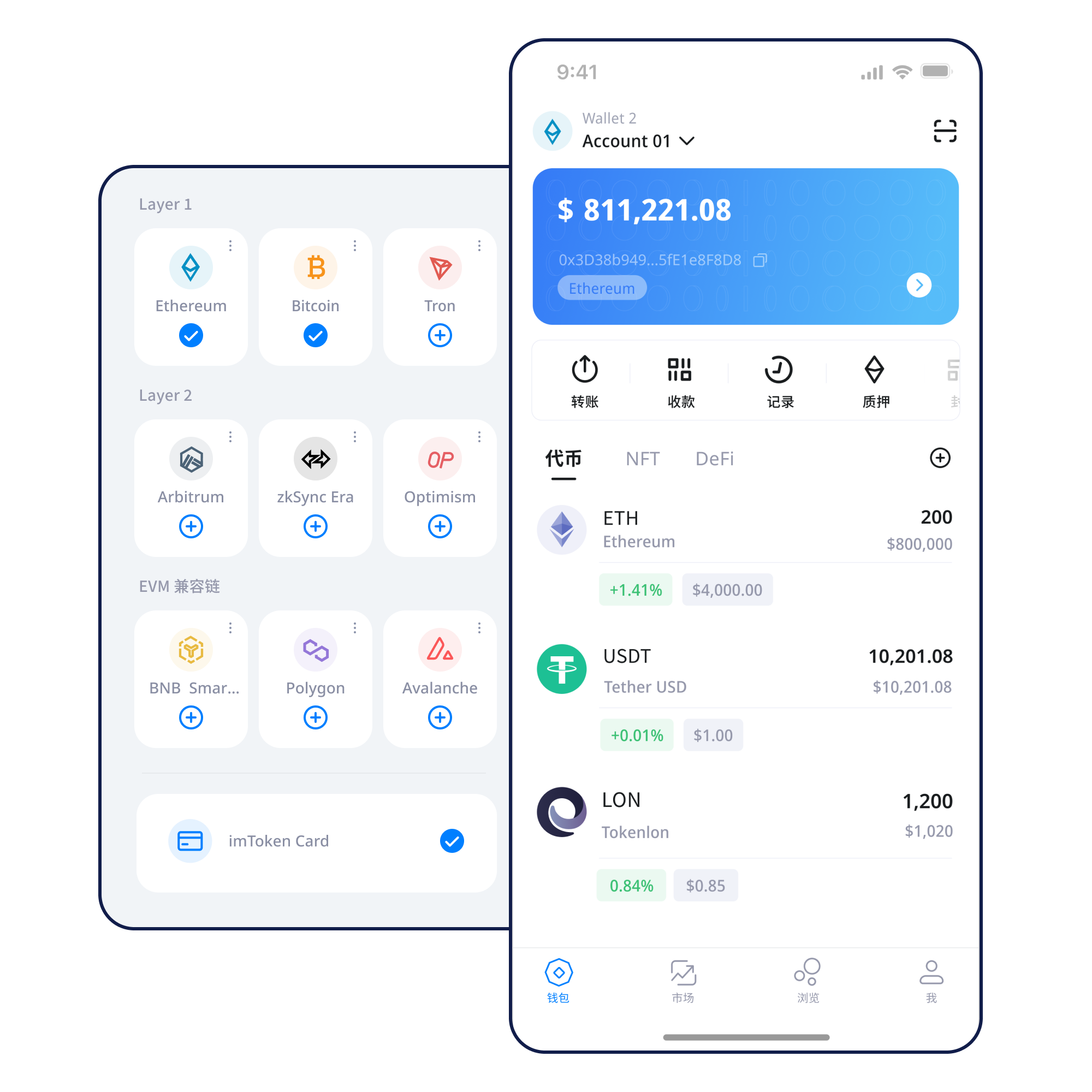
Start on a trusted device, create a new on-chain account and understand the difference between an address and recovery information.
View steps →02Back Up a WalletStore the seed phrase offline, avoid screenshots or sharing, and verify the backup in a trusted environment.
View steps →03Receive AssetsConfirm that the receiving address and network match, then verify the result using on-chain records.
View steps →04Send AssetsReview address, network, amount and gas; consider a small test and keep the transaction hash.
View steps →05Connect to a DAppVerify the domain first, then inspect account, signature and approval requests. A connection does not mean later requests should be accepted.
View steps →Different networks maintain independent state and fee mechanics. Treat network choice, address verification and transaction confirmation as one continuous workflow.
Explore multi-chain networks →Receiving address, network, amount, gas and transaction hash form the full verification path for an on-chain transfer.
Read transfer guide →View assets, manage networks and inspect transaction history on mobile.
A clear entry point for browser connections, DApp access and approval review, with each request checked independently.
Learn about Web access →
Seed phrases, private keys, offline backups and approval management matter throughout the wallet lifecycle.
Each network has its own chain state, gas asset and transaction history. Confirm where the asset lives, whether the destination supports the network and how the result will be verified.
Learn more →
Public chains are maintained by distributed nodes. Blocks, transactions, confirmations and explorer data form the basis for understanding on-chain state.
Learn more →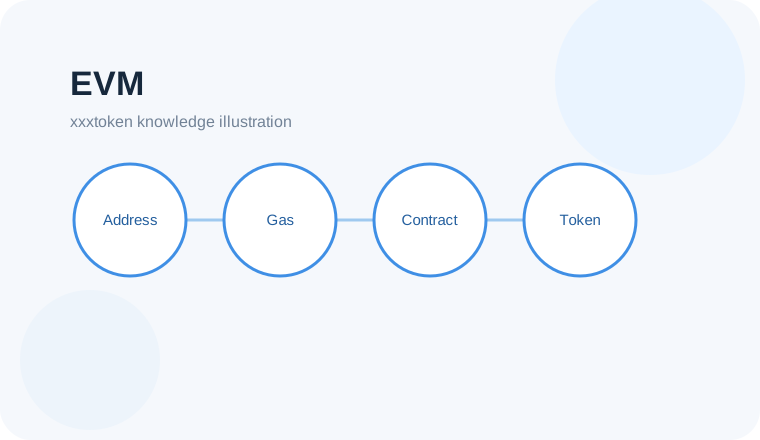
EVM networks share similar account and smart-contract models, while chain IDs, gas tokens, block state and bridge mechanics can differ.
Learn more →
Layer 2 systems move some execution or data to an expansion layer while keeping a settlement or security relationship with mainnet. Understand bridge paths and waiting periods before moving assets.
Learn more →Gas influences the cost and competition for block space; confirmation counts help describe how deeply a transaction is recorded. Both depend on the specific network.
Learn more →Use the official download entry and avoid unknown links or files shared in chats.
When creating or importing a wallet, use a trusted device and a suitable private environment.
Keep seed phrases offline, never disclose private keys, and do not enter recovery data into unknown pages.
Before moving assets, verify the network, address format and gas asset rather than relying on a token name alone.
Review address, network and amount again before sending, then use the transaction hash and a block explorer to verify status.
Inspect each DApp signature request and periodically review approvals that are no longer needed.
Connecting a wallet does not mean every signature request should be accepted. Review the domain, account, network, contract and permission scope for each signature or approval.
Open the Web3 guide →Seed phrases and private keys remain under the user’s control. imtoken personnel will not ask for them or for verification codes. On-chain transactions generally cannot be reversed by a wallet acting alone, and third-party DApps or smart contracts can introduce independent risk. Before transferring, signing or approving, verify the source, network, address, amount and permission scope; afterward, review transaction status and approvals you no longer need.
Open Security Center →Addresses, seed phrases, private keys, networks, gas, transaction hashes, DApps and approvals all shape how an on-chain action should be understood. A useful learning path begins with what can be verified and what permission is being granted, not simply where to click.
Read the featured introduction →Understand this topic through core concepts and practical verification steps.
EVMEVM & Smart ContractsUnderstand this topic through core concepts and practical verification steps.
Layer 2Layer 2 BasicsUnderstand this topic through core concepts and practical verification steps.
Web3DApp ApprovalsUnderstand this topic through core concepts and practical verification steps.
SecurityWallet SecurityUnderstand this topic through core concepts and practical verification steps.
GlossaryBlockchain GlossaryUnderstand this topic through core concepts and practical verification steps.
Understand Ethereum PoS, validators, reward sources, network status, withdrawals and exit mechanics. Staking does not guarantee returns and rewards can change.
Learn staking basics →Validators can face protocol penalties, exits may involve waiting periods, smart contracts carry technical risk, digital asset prices fluctuate, and third-party services may add further risk.
Understand PoS & validators →A digital wallet manages blockchain accounts, addresses and signing capability. Assets remain on the blockchain; control is established through the keys or credentials associated with an address.
A seed phrase is commonly used to derive or recover a set of wallet keys, while a private key directly authorizes signatures for a particular account. Both are highly sensitive.
No. imtoken personnel will not ask for a seed phrase, private key or verification code, and these should never be sent through websites, chats or email.
The same asset label can appear on different networks. Sending on the wrong network can prevent the asset from arriving in the expected context.
Gas measures the computation and block-space cost of an on-chain action. Payment method, units and fee dynamics depend on the network.
A transaction hash identifies a transaction and can be used in a block explorer to inspect status, confirmations, addresses and other on-chain data.
Network congestion, fee settings, node propagation and chain state can affect confirmation time. Check a reliable block explorer before submitting duplicates.
All download actions use the imtoken download page. Before transferring, signing or approving, verify the network, address and request details.